ROCKCASTLE REGIONAL HOSPITAL & RESPIRATORY CARE CENTER
SECTOR
Healthcare
SERVICES
Wayfinding
Interior Signage
Exterior Signage
ROCKCASTLE REGIONAL HOSPITAL & RESPIRATORY CARE CENTER
Why does a hospital need wayfinding?
Healthcare campuses present a unique set of navigational challenges. Often, these environments have developed over time and encompass multiple buildings. This makes navigation among the buildings complex. In addition, patients and families who visit healthcare campuses are often under stress. A well-designed wayfinding systems can help reduce their stress by providing easy-to-follow signage and legible directions to their destinations.
ROCKCASTLE REGIONAL HOSPITAL & RESPIRATORY CARE CENTER
Why does a hospital need wayfinding?
SECTOR
Healthcare
SERVICES
Wayfinding
Interior Signage
Exterior Signage
Healthcare campuses present a unique set of navigational challenges. Often, these environments have developed over time and encompass multiple buildings. This makes navigation among the buildings complex. In addition, patients and families who visit healthcare campuses are often under stress. A well-designed wayfinding systems can help reduce their stress by providing easy-to-follow signage and legible directions to their destinations.
Before | After
Rockcastle Regional Hospital and Respiratory Care Center was entering a critical moment in the evolution of its campus. With the addition of a new 64,000-square-foot building and continued changes in how patients, visitors, staff, and physicians move through the hospital, the existing sign system no longer met the needs to support clear, confident navigation from one end of the campus to the other.
A new sign plan was needed to create a unified wayfinding experience that connects the oldest portions of the hospital with the newest addition while helping users quickly understand where they are, where they need to go, and how to get there.
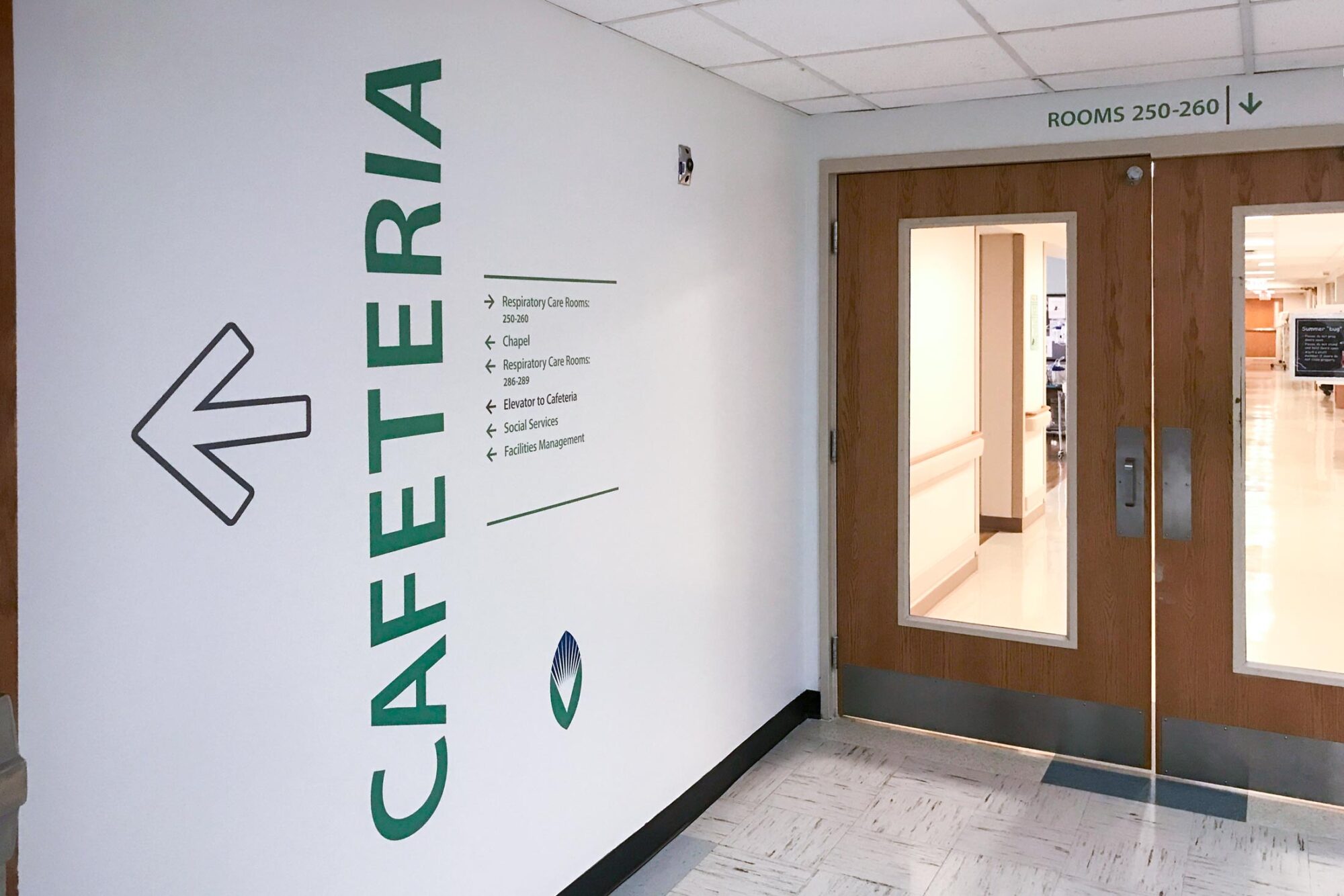
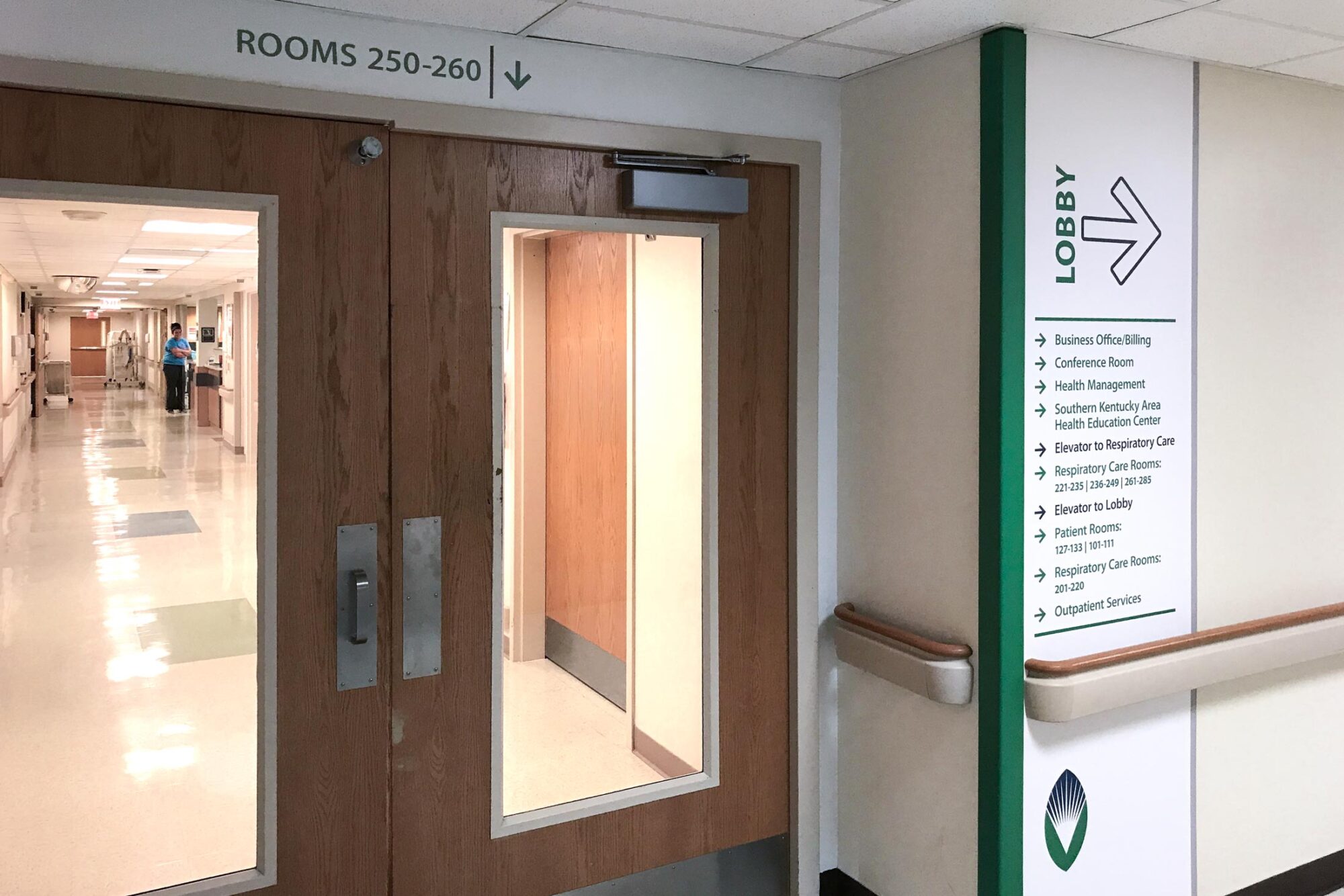
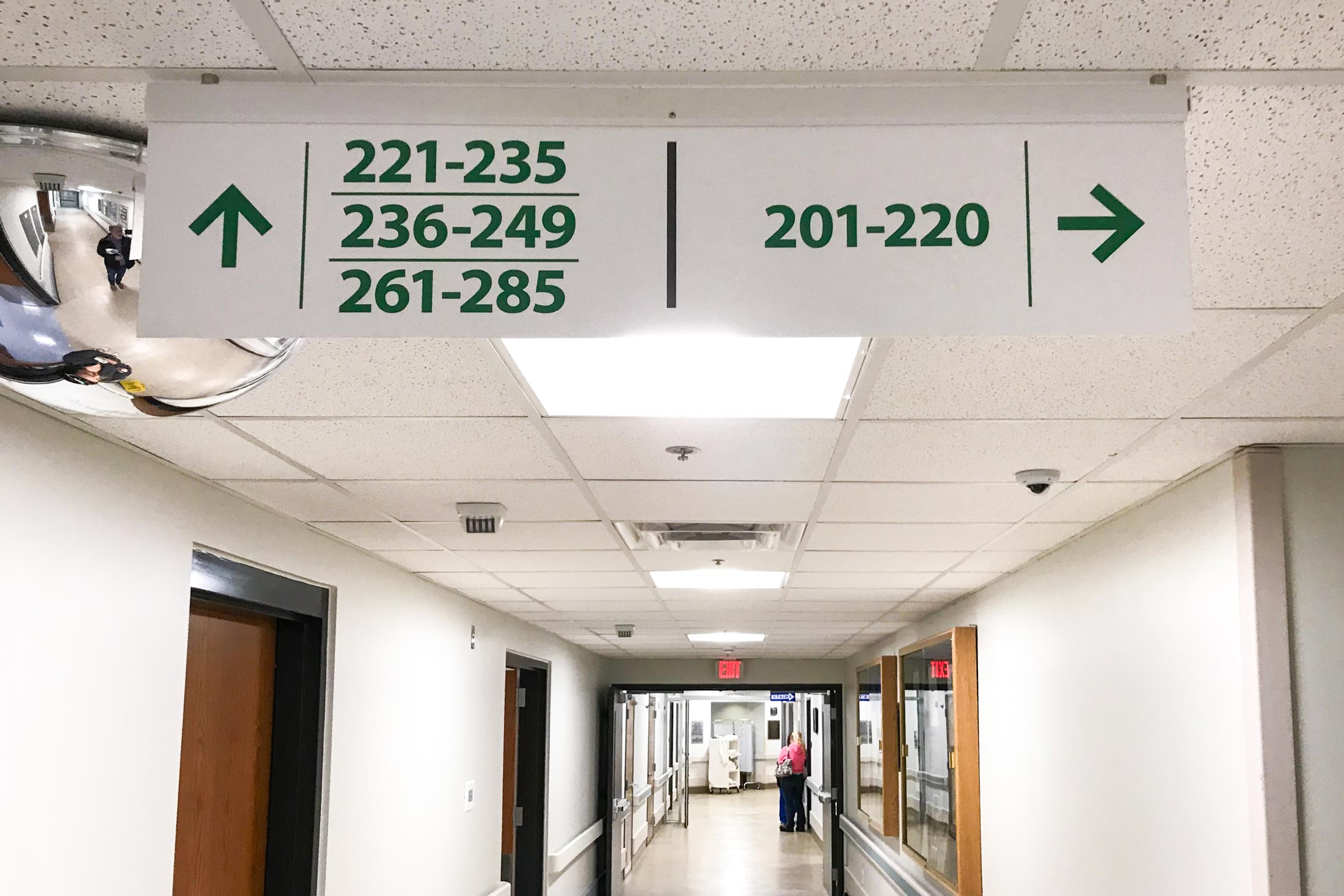
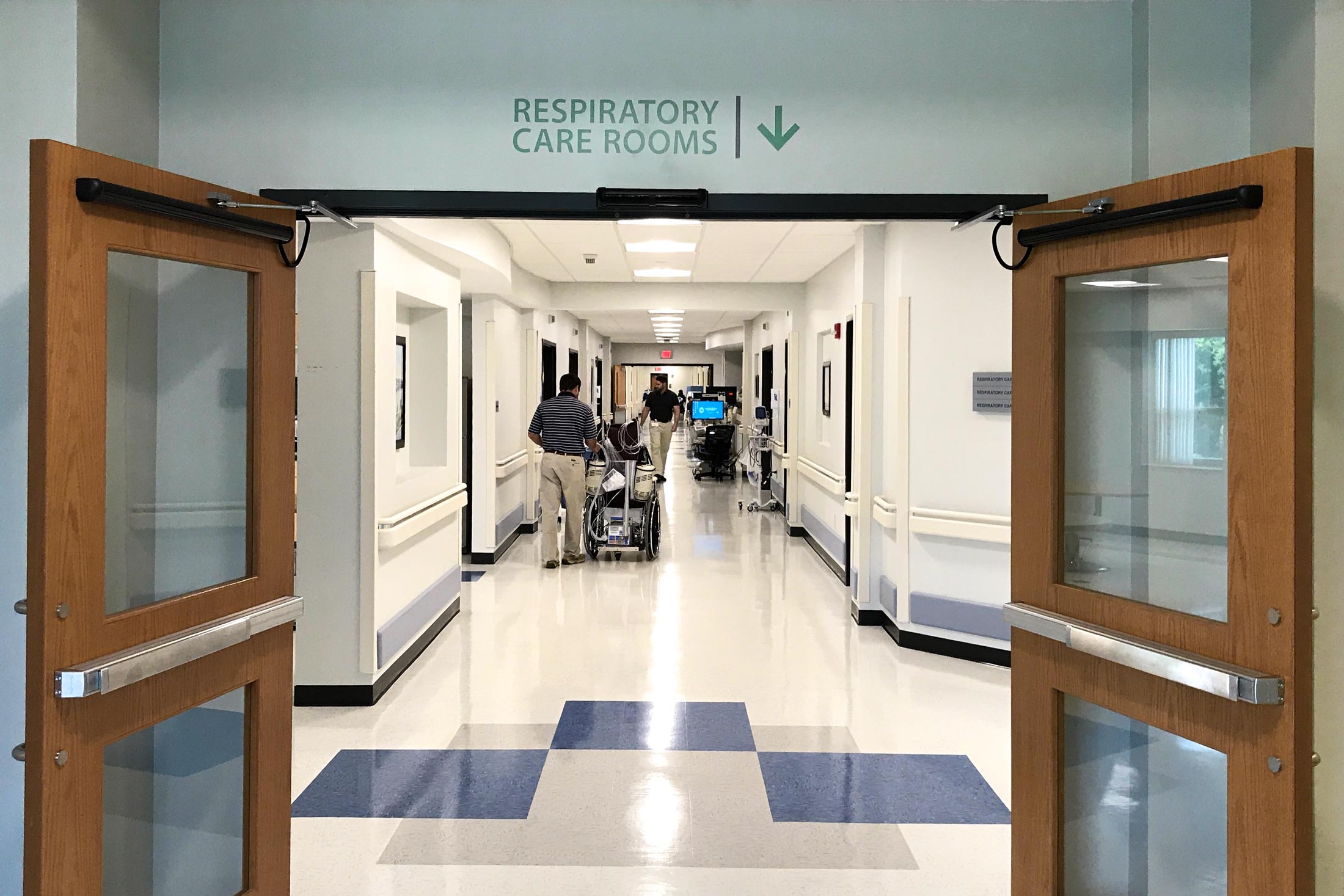
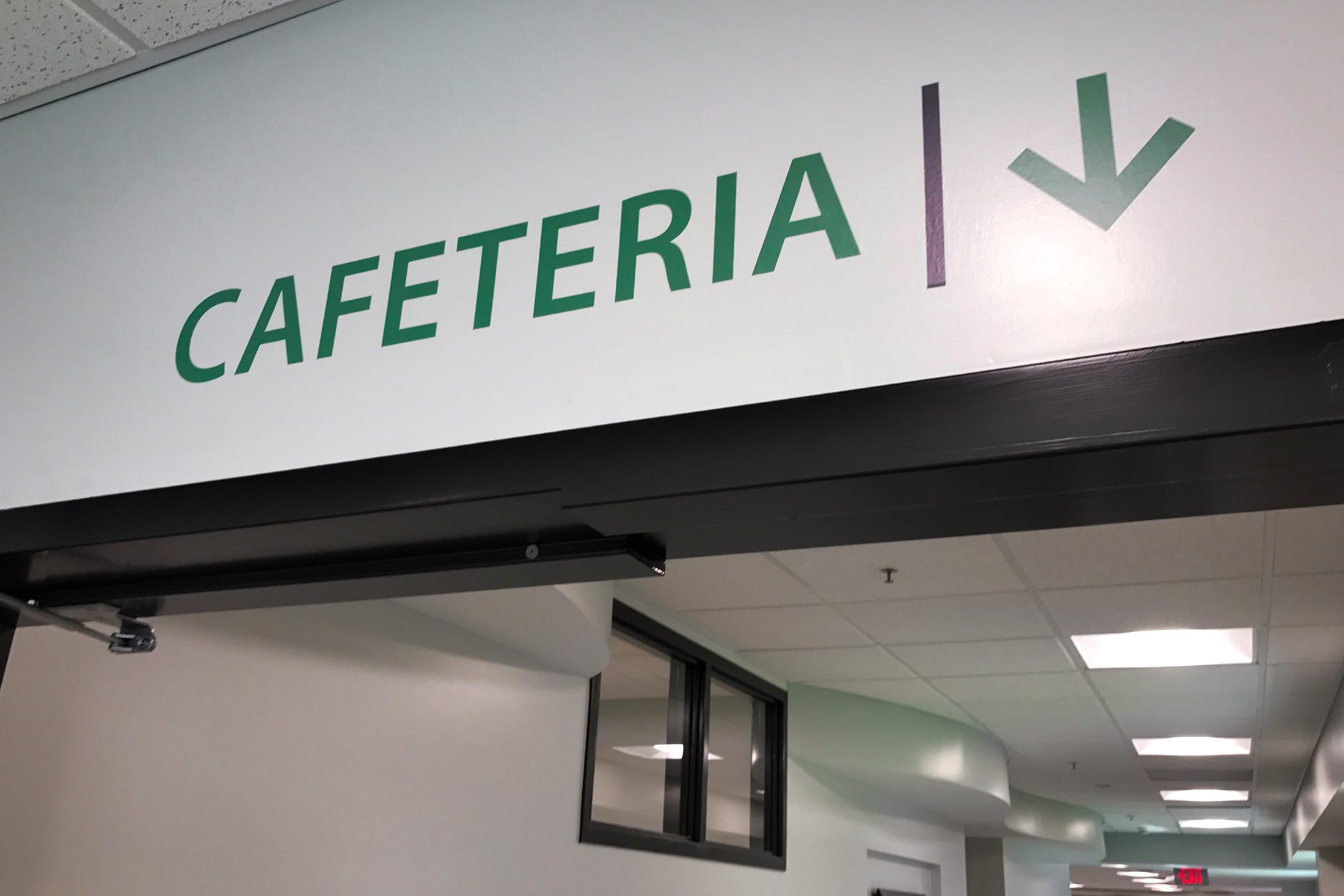
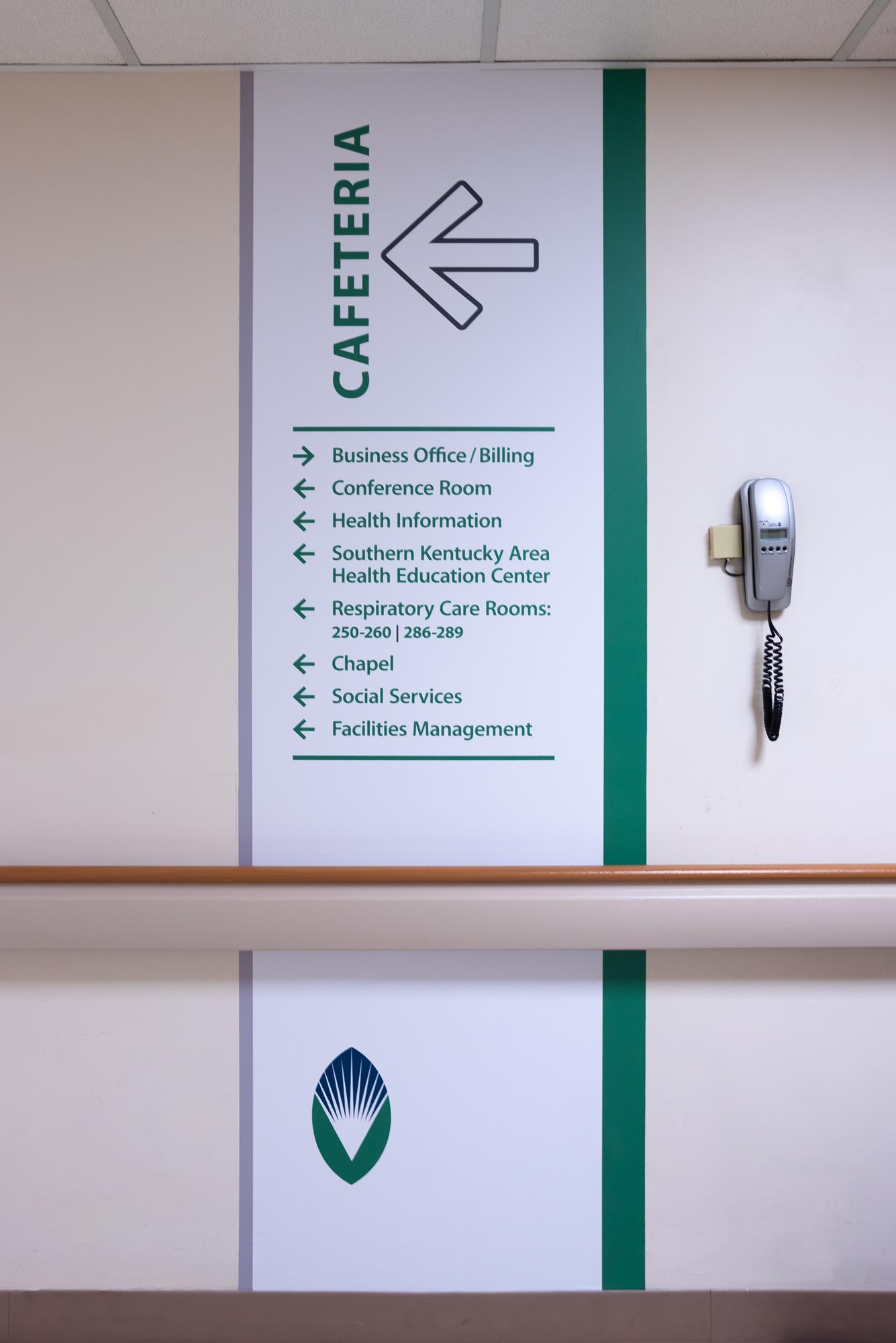
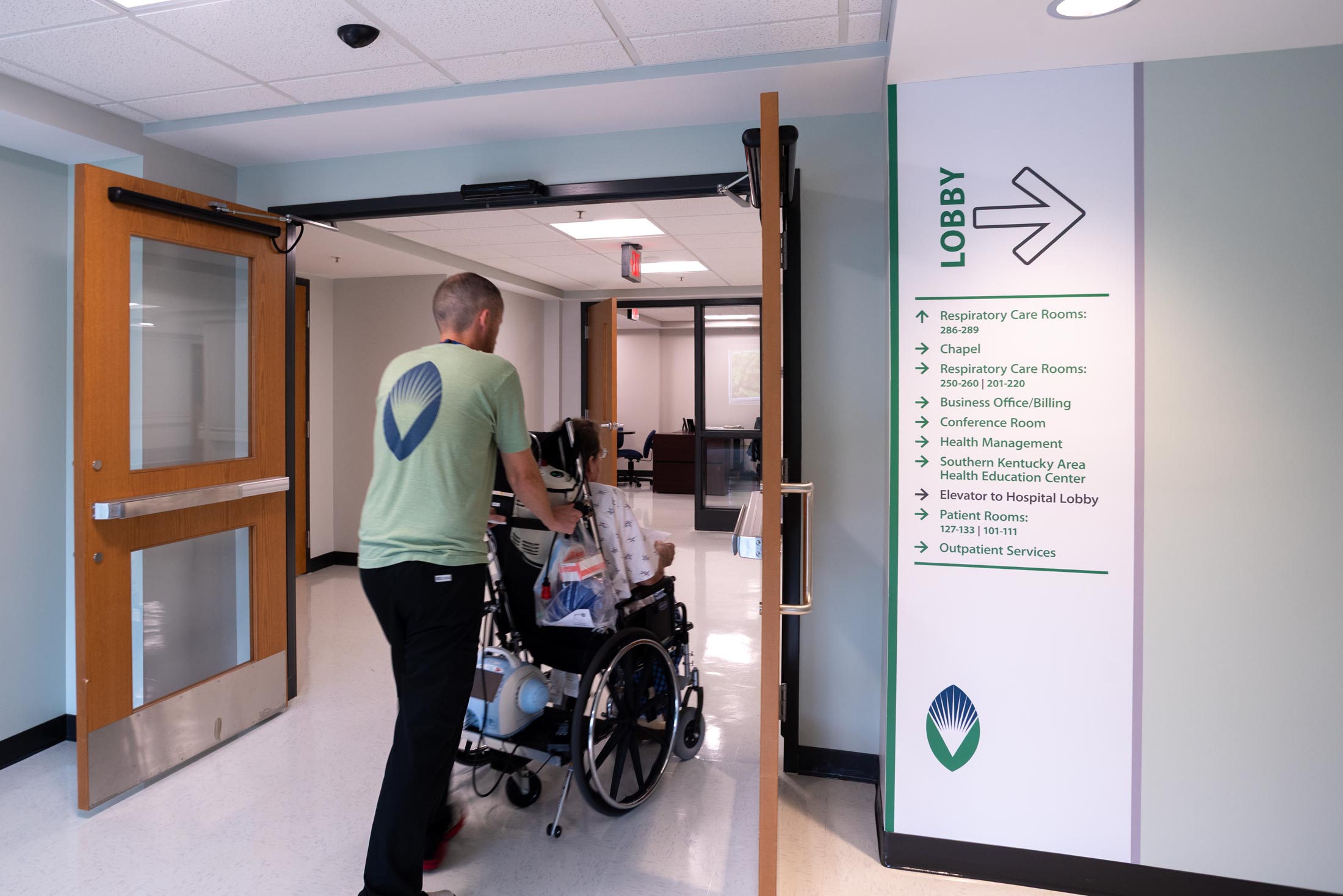
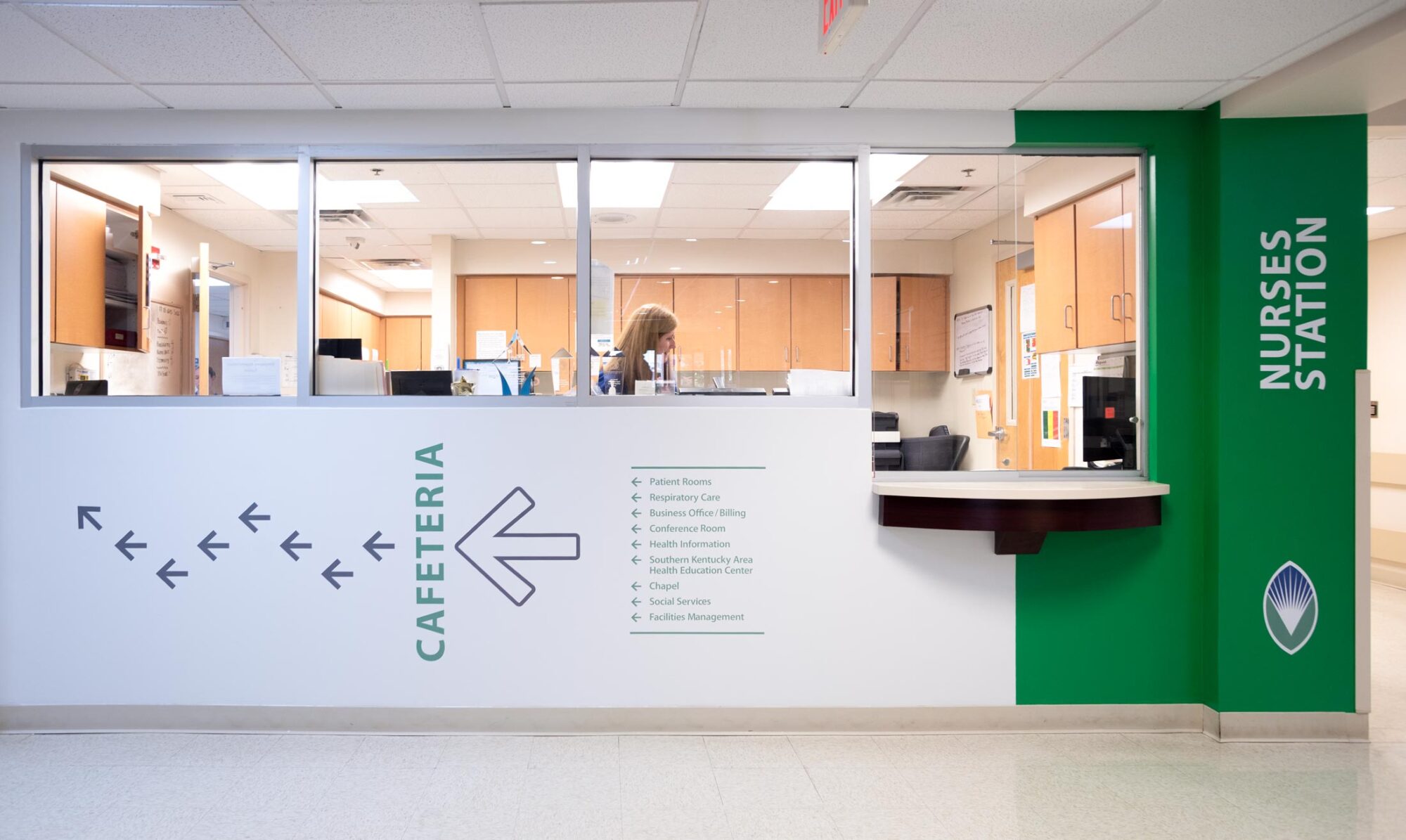
Inside the hospital, wayfinding is considered as more than a collection of directional signs. Environmental changes, elevator graphics, and visual landmarks work together to orient visitors and make long or complex routes easier to understand. The primary elevator experience offered an opportunity to create a central point of recognition, while graphics and interior treatments reinforced the identity of major destinations and help people navigate between older and newer sections of the hospital.
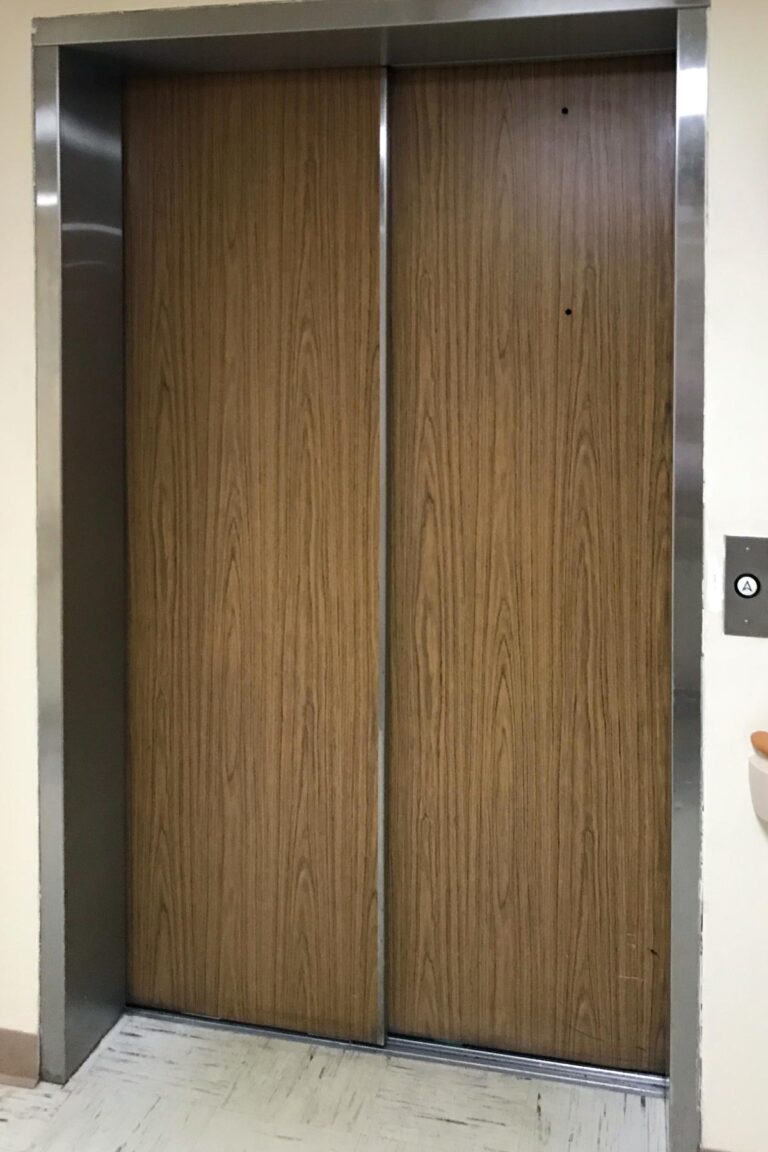
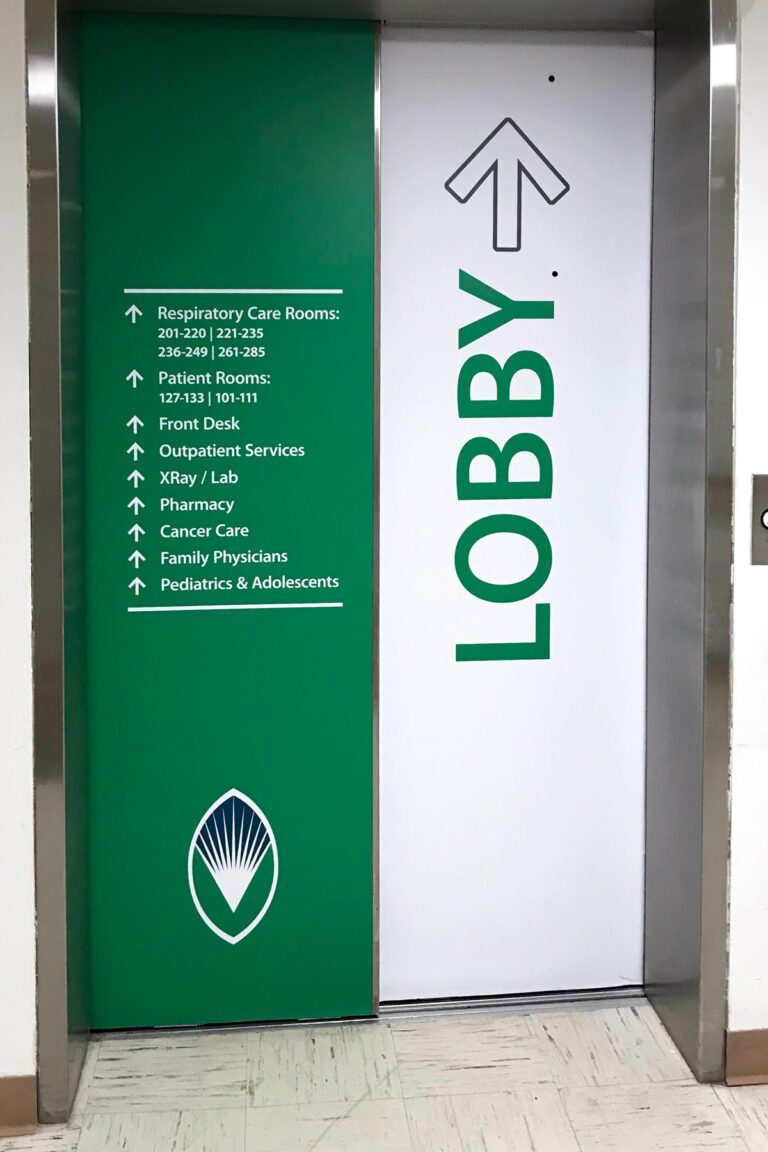
Before | After
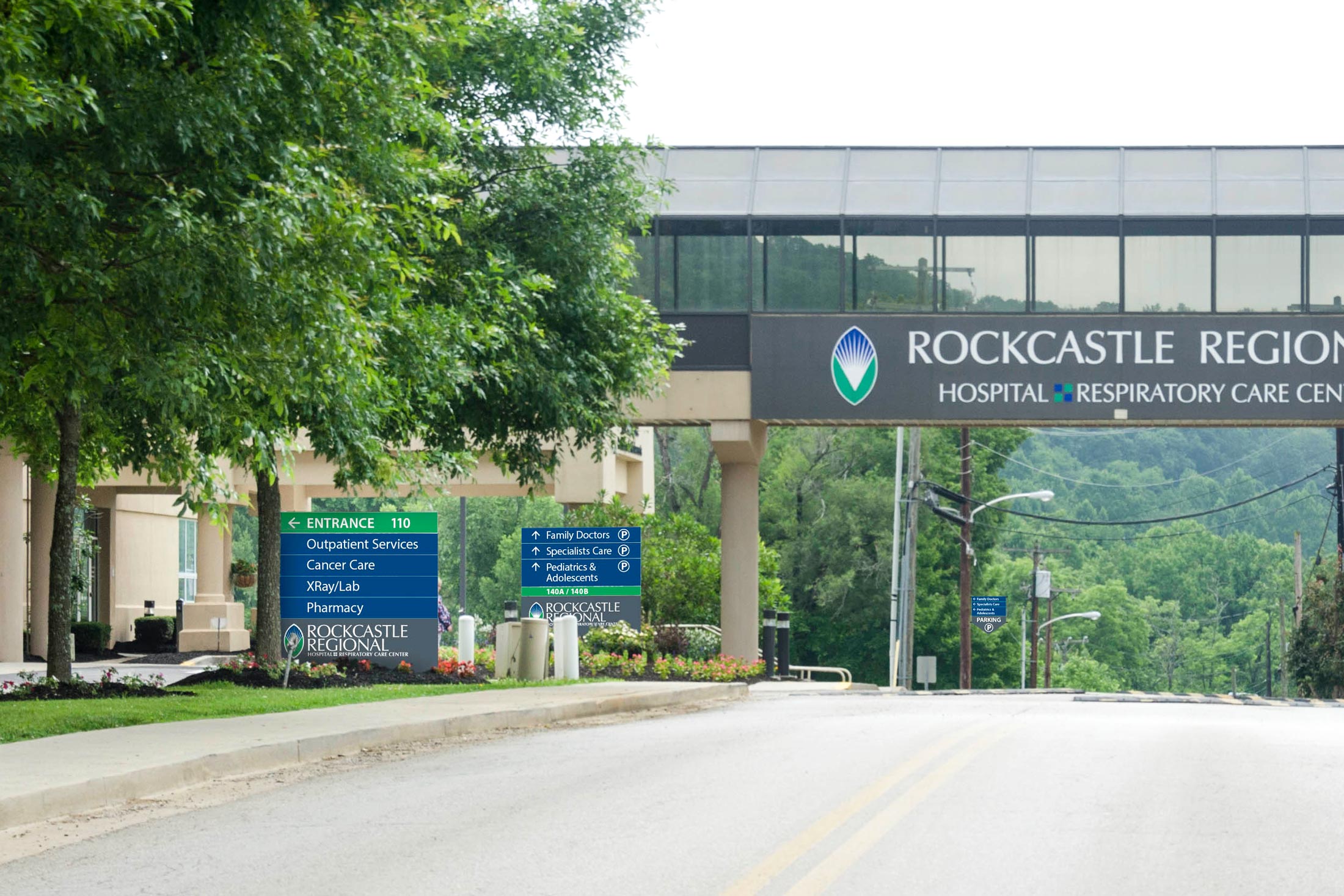
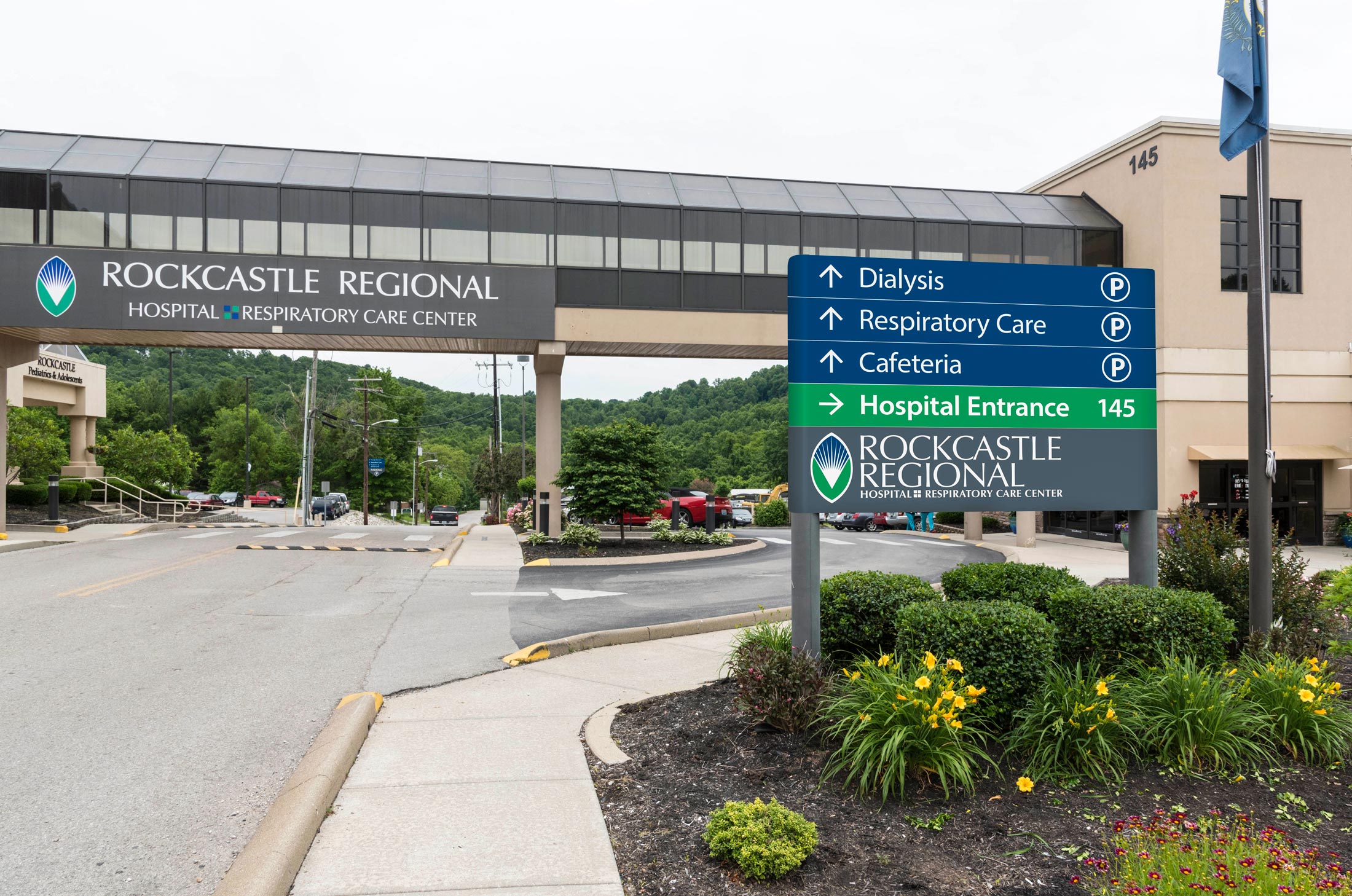
The new plan also addressed the full arrival experience, beginning before a visitor reaches the building. Exterior wayfinding across the entire campus clarified vehicular circulation, parking options, pedestrian routes, and primary entrances. This was particularly important as employee parking shifts to the south side and as visitors are directed to new or changing destinations, including the community cafeteria, lobby, cancer entry area, and respiratory care center. A coordinated exterior system was designed to reduce uncertainty at decision points and make the campus feel more organized, accessible, and welcoming.
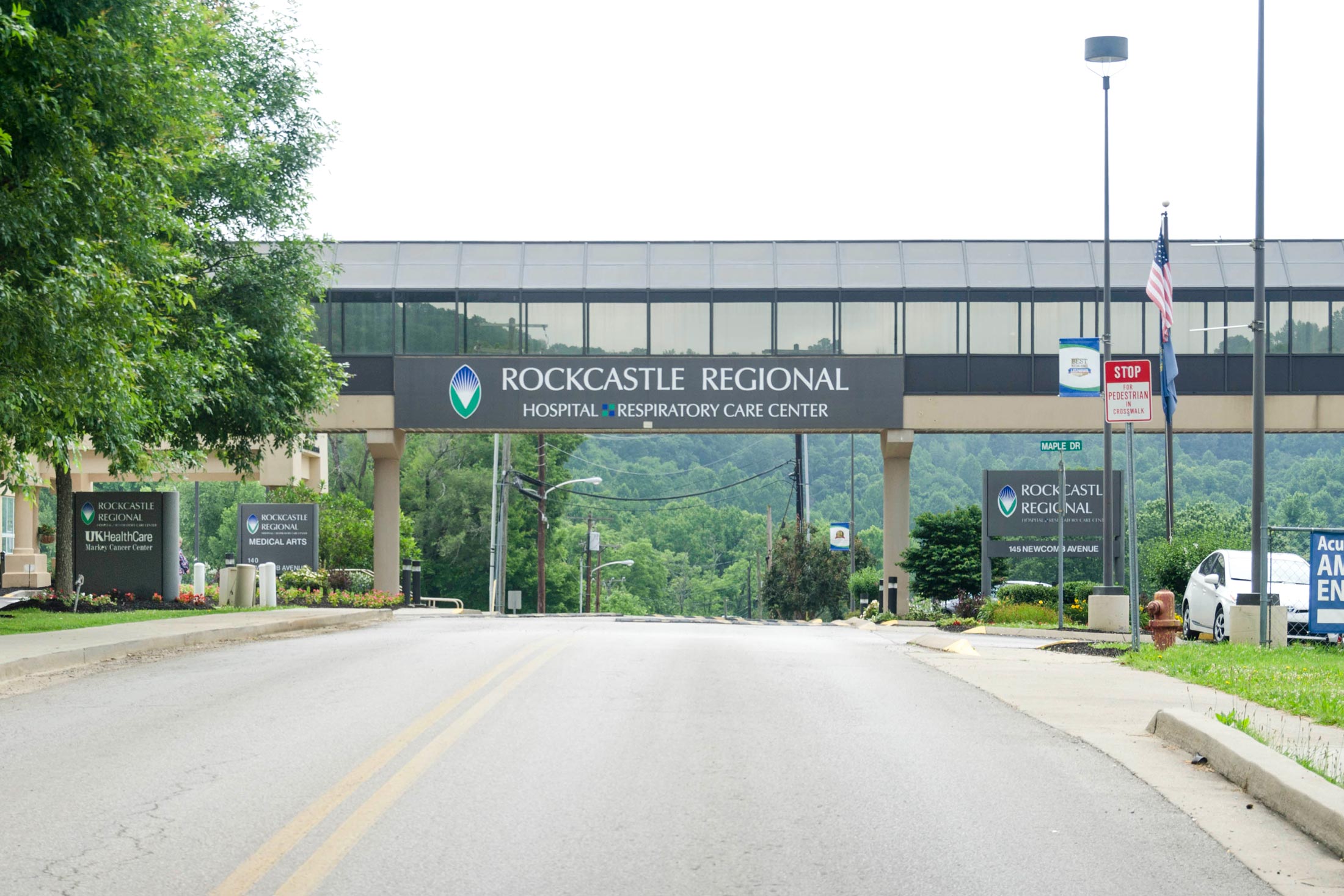
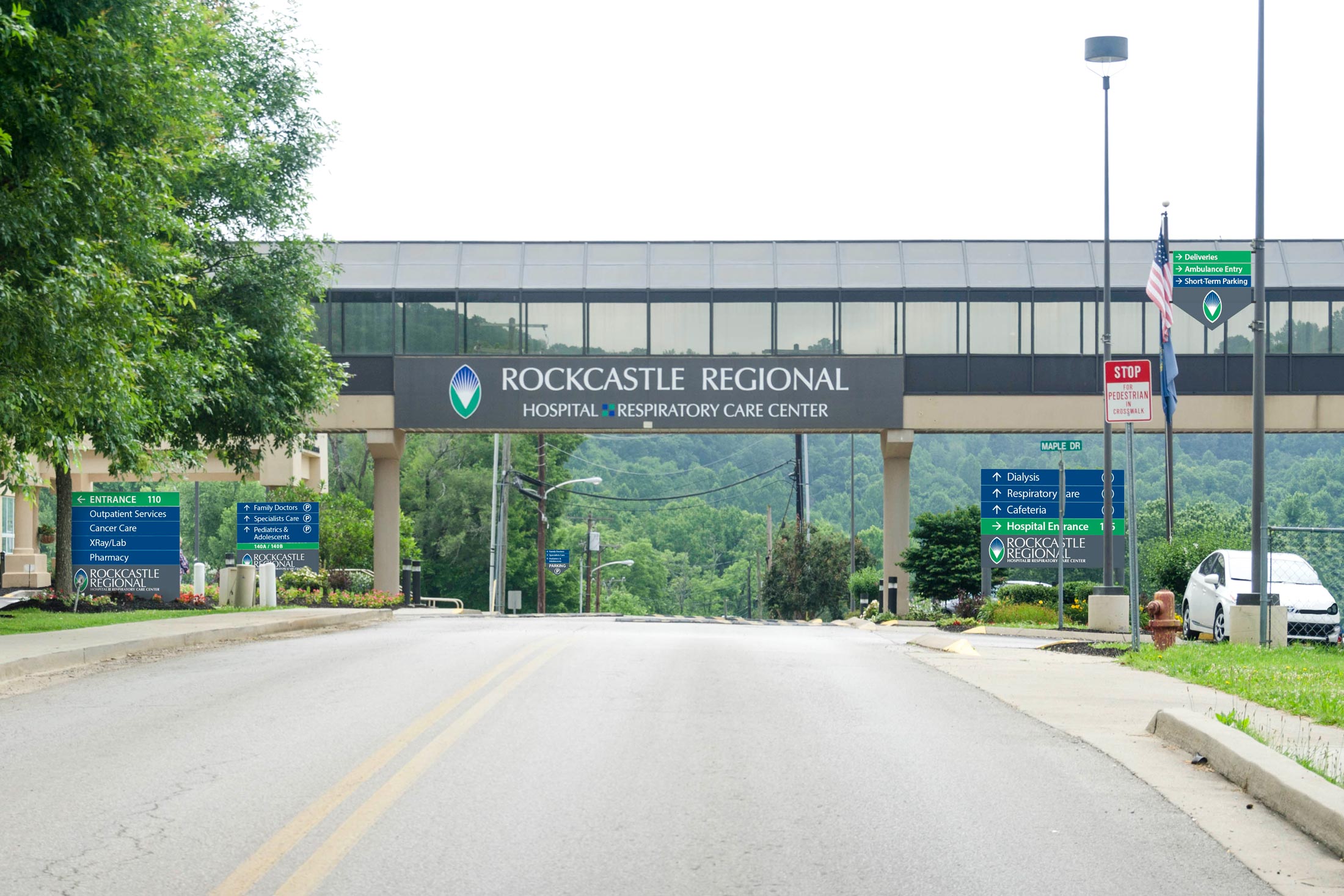
Exterior campus signage | Proposed wayfinding signage
Overall, the sign plan provides a comprehensive wayfinding framework for the Rockcastle Regional Hospital and Respiratory Care Center campus. It coordinates exterior signs, parking guidance, entry identification, interior directional signs, elevator graphics, and destination markers into a consistent system. By doing so, the hospital improved the experience of patients, visitors, staff, and physicians; supported the opening and integration of the new building; and created a clearer, more reassuring path through the entire campus.